How to Set Realistic Financial Goals for the Future
Financial goals give your money a clear direction. Instead of spending your income without a plan, you can decide what you want to achieve and take small steps toward it every month.
The best goals are not based on pressure or comparison. They are based on your income, responsibilities, current savings, debt, and the life you want to build.
Key Takeaways
Start with goals that match your current financial situation.
Write down exactly what you want, how much it will cost, and when you need it.
Divide large goals into smaller monthly or weekly targets.
Focus on one or two important goals before adding too many others.
Build an emergency fund before taking major financial risks.
Include debt repayment, savings, and future expenses in your plan.
Review your goals every month and adjust them when life changes.
Use automatic transfers to make progress without relying on memory.
Avoid copying someone else’s financial timeline.
Celebrate progress while continuing to work toward the larger goal.
What Is a Financial Goal?
A financial goal is a specific result you want your money to help you achieve.
Examples include:
Saving ₹50,000 for an emergency fund
Paying off a credit card
Buying a vehicle
Saving for education
Planning a wedding
Starting a business
Buying a home
Preparing for retirement
Paying for a family medical need
Taking a planned holiday
A goal becomes useful when it includes a clear amount and timeline. “I want to save more” is a good intention, but it is difficult to measure.
“I want to save ₹60,000 in 12 months” is a financial goal because you know what you need to do each month.
Why Do Financial Goals Matter?
Without clear goals, money often goes toward short-term spending. You may pay bills and buy things you need, but make little progress toward the future.
Financial goals can help you:
Make better spending decisions
Save consistently
Reduce impulse purchases
Pay off debt
Prepare for emergencies
Plan large expenses
Stay motivated
Measure your progress
Avoid depending on loans
Your goals also help you decide what to do when you have limited money. If you are saving for a house deposit, you may choose to reduce shopping or delay an expensive upgrade.
Step 1: Understand Your Current Financial Position
Before setting future goals, understand where you are today.
Write down:
Monthly income
Fixed expenses
Flexible expenses
Savings
Investments
Loans
Credit card balances
Regular family responsibilities
Upcoming large expenses
This information helps you set goals that are possible instead of creating a plan based on guesses.
For example, if your monthly income is ₹50,000 and essential expenses use ₹40,000, you may not be able to save ₹20,000 every month. A realistic target may be ₹5,000, along with a plan to reduce costs or increase income later.
Knowing your starting point is not discouraging. It gives you a practical foundation.
Step 2: Decide What Matters Most to You
Financial goals should support your real priorities. Take time to think about what you want your money to make possible.
Ask yourself:
What would make my life more stable?
What expense causes the most financial stress?
What do I want to achieve in the next year?
What do I want my life to look like in five or ten years?
What responsibilities must I prepare for?
What financial problem do I want to stop repeating?
Your answers may lead to goals such as building emergency savings, paying off debt, supporting your family, or creating more independence.
Do not choose goals only because other people are pursuing them. A home purchase may be important to one person and unnecessary for another.
Step 3: Divide Goals Into Time Periods
Organizing goals by time makes them easier to manage.
Short-Term Goals
These may take a few weeks to one year.
Examples:
Saving ₹10,000 for emergencies
Paying an annual insurance bill
Buying a necessary appliance
Clearing a small debt
Saving for a short trip
Paying for a course
Medium-Term Goals
These may take one to five years.
Examples:
Buying a vehicle
Paying for higher education
Starting a small business
Building a larger emergency fund
Saving for a wedding
Making a home deposit
Long-Term Goals
These usually take more than five years.
Examples:
Buying a home
Retirement savings
Funding children’s education
Building long-term investments
Becoming debt-free
Creating financial independence
You do not need to work on every goal at the same time. Use the time periods to understand what needs attention first.
Step 4: Turn General Ideas Into Specific Goals
A clear financial goal should answer four questions:
What do I want to achieve?
How much will it cost?
When do I need the money?
How much must I save regularly?
For example:
Goal: Build an emergency fund
Amount: ₹90,000
Timeline: 18 months
Monthly contribution: ₹5,000
This is easier to follow than saying, “I need to save for emergencies.”
Another example:
Goal: Save for a vehicle
Amount: ₹240,000
Timeline: 24 months
Monthly contribution: ₹10,000
If the monthly amount is too high, you can extend the timeline, lower the target, increase income, or change the type of vehicle.
Step 5: Use Real Numbers
Research the likely cost of your goal before choosing an amount.
If you are saving for education, include:
Tuition
Books
Transport
Equipment
Application fees
Living costs
Possible price increases
If you are saving for a vehicle, include:
Down payment
Registration
Insurance
Maintenance
Fuel
Repairs
Loan costs
If you are planning a wedding or event, include:
Venue
Food
Clothing
Travel
Photography
Invitations
Gifts
Unexpected costs
A goal based only on the main price may leave you unprepared for related expenses.
Step 6: Calculate Your Monthly Target
Use a simple formula:
Total amount needed ÷ Number of months = Monthly savings target
For example, if you need ₹120,000 in 12 months:
₹120,000 ÷ 12 = ₹10,000 per month
If ₹10,000 is not possible, consider these options:
Extend the timeline
Reduce the target amount
Save a smaller amount regularly
Add extra income
Use bonuses or refunds
Reduce optional spending
Choose a lower-cost alternative
A realistic goal is one that fits your financial life, not one that looks impressive on paper.
Step 7: Build a Basic Emergency Fund First
Before focusing on large lifestyle goals, create a small emergency fund.
Start with a target such as:
₹5,000
₹10,000
One week of essential expenses
One month of essential expenses
Over time, work toward three to six months of essential costs.
An emergency fund protects your other goals. Without it, a medical bill or urgent repair could force you to use money saved for education, travel, or a home.
You do not need to stop all other goals while building emergency savings. You can divide your money, such as:
70% toward your emergency fund
20% toward debt repayment
10% toward a personal goal
Adjust the split based on your situation.
Step 8: Deal With High-Cost Debt
Debt can make future goals harder to reach because interest takes money away from your income.
List your debts and include:
Total balance
Interest rate
Minimum payment
Due date
Remaining term
Focus on high-interest debt first while continuing minimum payments on other loans.
You can also choose a debt method:
Highest-Interest Method
Pay extra toward the debt with the highest interest rate. This may reduce the total interest you pay.
Smallest-Balance Method
Pay extra toward the smallest balance first. This can create quick progress and motivation.
Choose the method you are more likely to follow. The best system is one you can maintain.
Step 9: Choose a Small Number of Goals
Having too many goals can spread your money too thin.
You may want to save for:
A home
A vehicle
Travel
Retirement
Education
Emergency expenses
Debt repayment
A business
New technology
Trying to fund all of them at once may create slow progress everywhere. Choose one or two top priorities.
A simple order could be:
Essential bills
Minimum debt payments
Starter emergency fund
High-interest debt
Larger emergency fund
Important medium-term goals
Long-term savings
Your order may be different, but a clear order prevents confusion.
Step 10: Create a Goal-Based Monthly Budget
A regular budget shows how much money you spend. A goal-based budget also shows what your spending is helping you achieve.
For example, if your income is ₹60,000, your monthly plan might include:
Essential expenses: ₹38,000
Emergency fund: ₹5,000
Debt repayment: ₹5,000
Home deposit: ₹4,000
Irregular expenses: ₹3,000
Personal spending: ₹5,000
Total planned amount: ₹60,000
This plan gives your savings a place before the month begins.
Step 11: Automate Your Goal Contributions
Automatic transfers make progress easier because the money moves before you have a chance to spend it.
Set up separate transfers for different goals, such as:
Emergency fund
Education
Vehicle
Home deposit
Retirement
Annual bills
Use account names or labels that remind you why the money is being saved.
If your income changes every month, automate a percentage instead of a fixed amount. For example, transfer 5% of every payment you receive.
Step 12: Use Separate Savings Accounts
Keeping all your money in one account can make it difficult to know what is available for spending.
Separate accounts or digital savings spaces can help you organize money for:
Bills
Emergency savings
Short-term goals
Long-term goals
Daily spending
You do not need a large number of accounts. Even two or three clear categories can make your plan easier to manage.
Keep emergency money and short-term savings in safe, accessible places. Long-term money may be handled differently depending on your goals and financial situation.
Step 13: Plan for Inflation and Rising Costs
The price of many goods and services increases over time. A goal that costs ₹100,000 today may cost more in several years.
When setting a long-term goal, include room for rising costs. You can do this by:
Reviewing the goal every year
Adding a small extra amount to your target
Increasing your monthly contribution when income rises
Comparing current prices regularly
Do not let changing prices discourage you. Use them as a reason to update your plan.
Step 14: Give Every Goal a Deadline
A deadline creates urgency and helps you calculate the required savings.
Instead of saying:
“I want to buy a home someday.”
Write:
“I want to save ₹600,000 for a home deposit over the next five years.”
Then calculate:
₹600,000 ÷ 60 months = ₹10,000 per month
If the amount is too high, you now know what needs to change. You can extend the timeline, increase income, lower the deposit target, or consider a different property.
Step 15: Break Large Goals Into Milestones
Large numbers can feel overwhelming. Break your goal into smaller stages.
For a ₹100,000 emergency fund, milestones could be:
₹10,000
₹25,000
₹50,000
₹75,000
₹100,000
For a debt repayment goal, you could celebrate:
First 10% paid
First ₹20,000 cleared
Half the balance paid
One account closed
Full debt cleared
Milestones help you notice progress before the final goal is complete.
Step 16: Create a Plan for Extra Income
Do not let all extra income disappear without a decision.
If you receive a bonus, refund, gift, or freelance payment, divide it before spending it.
One possible split is:
50% toward your main financial goal
30% toward debt or emergency savings
20% for personal enjoyment
The correct split depends on your priorities. The important part is deciding in advance.
Step 17: Protect Your Goals From Lifestyle Inflation
When your income increases, it may be tempting to increase every expense. A better approach is to direct part of the increase toward your goals.
For example, if your monthly income increases by ₹10,000, you could use:
₹5,000 for savings
₹3,000 for improved lifestyle spending
₹2,000 for debt repayment
This allows you to enjoy higher income while continuing to make progress.
Step 18: Review Your Goals Every Month
A monthly review does not need to take long.
Ask:
How much did I save?
Did I contribute the planned amount?
Did my expenses change?
Is the deadline still realistic?
Did an unexpected cost appear?
Should I increase or reduce the monthly target?
Is this still an important goal?
If you miss one month, adjust the next month instead of giving up.
Step 19: Review Your Goals Every Year
Once a year, complete a deeper review.
Check:
Your income
Your savings balance
Your debt
Your emergency fund
Your investments
Your upcoming responsibilities
The cost of your goals
Your timeline
You may need to update your target because your income, family situation, or priorities have changed.
A financial goal is a living plan. It should change when your life changes.
Step 20: Avoid Comparing Your Timeline
Someone else may buy a house, travel internationally, or retire early before you. Their income, family support, expenses, debt, and opportunities may be completely different.
Compare your current position with your own previous position.
Ask:
Am I saving more consistently?
Is my debt decreasing?
Is my emergency fund growing?
Am I making fewer impulse purchases?
Am I closer to my main goal?
Personal progress is more useful than comparison.
Common Financial Goal Mistakes
Setting Goals Without Checking Your Budget
A goal is not realistic if it leaves you unable to pay for basic needs. Calculate your available money first.
Choosing Too Many Goals
Too many goals can create small contributions that do not feel meaningful. Focus on your highest priorities.
Ignoring Unexpected Expenses
If your plan does not include repairs, healthcare, gifts, or annual bills, you may need to pause your main goal every time one appears.
Create sinking funds for predictable irregular costs.
Using Credit to Reach a Goal
Borrowing for a holiday, gadget, or event can make the goal more expensive. Save first when possible.
Depending on Motivation
Motivation changes. Use automatic transfers, reminders, separate accounts, and regular reviews to keep moving when motivation is low.
Choosing an Unrealistic Deadline
A short deadline may require an amount you cannot afford. Extend the timeline instead of constantly missing the target.
Forgetting to Celebrate Progress
Acknowledging progress can help you stay committed. Celebrate in a way that does not undo your savings.
A Simple Financial Goal Worksheet
Use this format for each goal:
Goal:Why it matters:Total amount needed:Current savings:Amount still needed:Deadline:Number of months remaining:Monthly savings target:Where the money will be kept:What I will do if I fall behind:
For example:
Goal: Emergency fund Why it matters: Protect income and avoid expensive debt Total amount needed: ₹90,000 Current savings: ₹15,000 Amount still needed: ₹75,000 Deadline: 15 months Monthly savings target: ₹5,000 Where the money will be kept: Separate savings account What I will do if I fall behind: Save part of bonuses and reduce optional spending temporarily
Writing the plan makes it easier to follow.
Example of a Realistic Financial Goal Plan
Imagine your monthly income is ₹70,000.
Your essential expenses are ₹45,000, leaving ₹25,000 for goals and flexible spending.
You could create this plan:
Emergency fund: ₹7,000
High-interest debt: ₹6,000
Education goal: ₹4,000
Retirement savings: ₹3,000
Personal spending: ₹5,000
Total: ₹25,000
After the emergency fund reaches its target, you could redirect the ₹7,000 toward debt, education, or retirement.
This type of plan can change over time. The main idea is to assign your available money before spending it.
What to Do When You Fall Behind
Missing a goal does not mean the plan has failed. First, find out why.
Possible reasons include:
Your income changed
An essential expense increased
The deadline was too short
You forgot about irregular expenses
You set too many goals
Your spending was higher than expected
Then choose a solution:
Reduce the monthly target
Extend the deadline
Pause a lower-priority goal
Cut an optional expense
Increase income
Use extra income
Recalculate the total amount needed
A realistic plan can be adjusted without being abandoned.
How to Stay Motivated
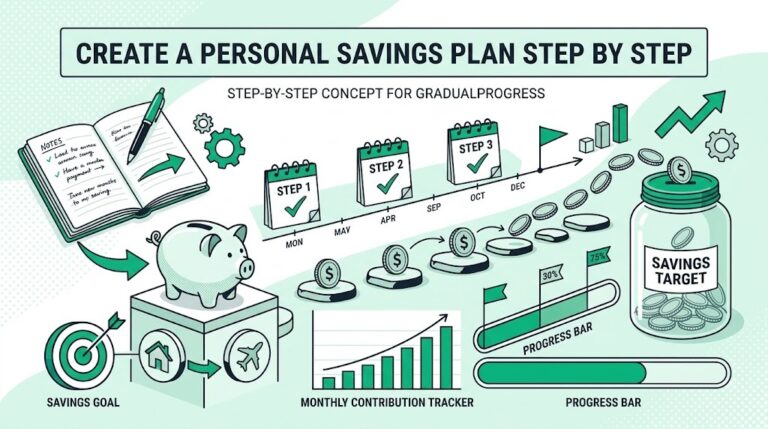
Make your goals visible and specific.
You can:
Use a savings tracker
Set monthly milestones
Create a progress chart
Name your savings account
Schedule a monthly review
Keep a photo or note that represents the goal
Share the plan with someone you trust
Celebrate important milestones
Remind yourself what the goal will make possible. Saving for a vehicle may provide reliable transport. Building an emergency fund may protect your family from debt. Paying off a loan may create more monthly freedom.
Frequently Asked Questions
What is the best way to start setting financial goals?
Begin by reviewing your income, expenses, debt, and savings. Then choose one important goal and write down the total amount and deadline.
Start with a goal that is possible within your current budget.
How many financial goals should I have at once?
Most people benefit from focusing on one to three main goals. You can still contribute small amounts to other long-term goals, but avoid dividing your money into so many categories that progress becomes difficult to see.
Prioritize your goals based on urgency and importance.
What financial goal should come first?
Many people start with essential bills, a small emergency fund, and high-interest debt. After that, you can focus more heavily on larger goals such as a home, education, or retirement.
Your first goal may be different if you have an urgent medical need or another serious responsibility.
How much should I save each month?
The amount depends on your income, expenses, debt, and deadline. Calculate the total amount needed and divide it by the number of months available.
If the monthly amount is too high, change the deadline, target, or income plan.
Is it better to save for short-term or long-term goals first?
You usually need a balance. Short-term needs, emergency savings, and high-cost debt often deserve immediate attention, while long-term savings should continue with a smaller regular contribution when possible.
Your personal situation determines the right order.
What if I cannot afford my financial goal right now?
Start with a smaller version of the goal. Save ₹100, ₹500, or whatever fits your budget while looking for ways to reduce expenses or increase income.
A small contribution keeps the goal active and helps you build the habit.
How can I stay consistent with my savings plan?
Automate transfers, use a separate account, set reminders, and review progress once a month. Make the contribution realistic so you do not need to take money back later.
Consistency is more important than making a large deposit once.
Should I change my goals when my income increases?
Yes. An income increase may allow you to save more, repay debt faster, or reach your deadline earlier.
You can also use part of the increase for better living conditions while protecting part for future goals.
Can I have financial goals if I have debt?
Yes. Continue minimum payments, build a small emergency buffer, and focus extra money on expensive debt. A clear plan can help you reduce debt while preparing for future needs.
Avoid adding new debt for non-essential purchases.
How often should I review my financial goals?
Review your progress every month and complete a deeper review once a year. Review sooner if your income, expenses, family responsibilities, or health situation changes.
Updating a goal is a sign of good planning, not failure.